Friday, 12 August 2016


Moving on – Introducing Mila


Most of our lovely customers who attend the kennels and daycare will know our Mila, our ditsy, petite Collie with the blue eye. Here’s her story. 


Losing Amber was hard.

It was a strange mixture of feelings. We’d always known from the first day of her diagnosis with Lymphoma, that it was going to kill her. The vet had given us a vague figure, based on his experience. That figure was six months, perhaps even a year. 


Amazingly, thanks to the chemotherapy, Amber sailed well past her one year limit and achieved an extra fifteen months of life.  But even though each day was a gift that I cherished, my anxiety ate me up inside. I couldn’t bear to lose her, yet it was happening and inescapable, and all I could do was wait and wonder when.


When that day finally came, and Lee and I sat on the floor beside her,  nodded to our vet, Richard, to go ahead, and felt her little body go limp in our hands, I was shocked that I felt... relieved. 


All that waiting and wondering had taken its toll, and not only that, but I had been worrying about her euthanasia. I was so scared that her very last moments may frighten or cause her stress, but it wasn’t like that. Her death was peaceful and calm and she was surrounded by love. It was only us that hurt, and that we could live with. 


It didn’t take long for the silence to get to us. The lack of clicking nails on the wooden floors, a knock on the door without a flurry of barking, her favourite squeaky toy ‘Baby’ lay alone in her basket. It had been less than a week and I felt guilty even thinking about getting another dog so soon, but I had been grieving for Amber’s loss every day for the past fifteen months, I didn’t need, or want, to grieve anymore. The chaos and mess of a naughty puppy seemed like it would be a welcome distraction. So, the hunt began. 


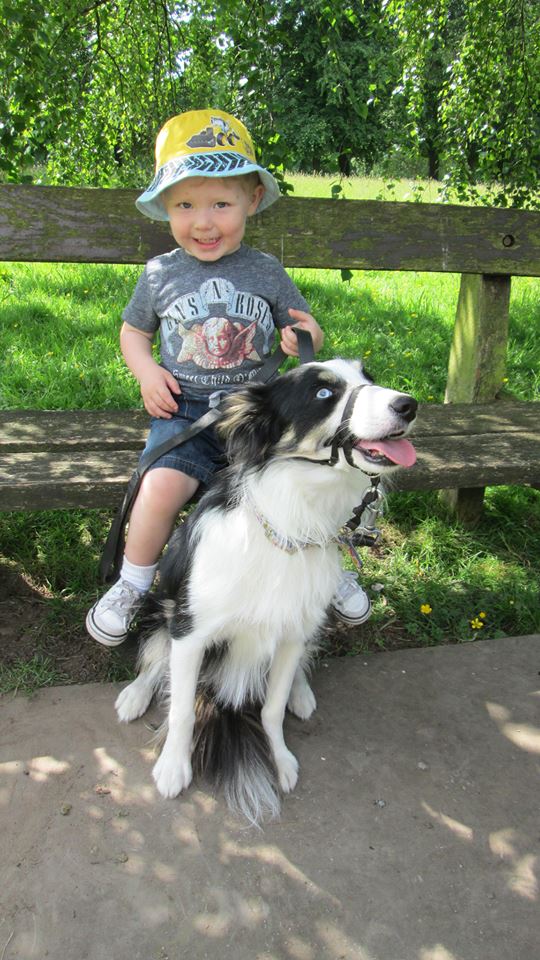
Amber had been a rescue dog, but this time, just this once, we made the decision not to adopt a rescue. One look at George, our crazy, noisy, bolshie toddler, and we knew that it just wasn’t fair to expect an adult dog, who had perhaps been neglected or abused, to cope with him. A puppy could grow up right in the thick of it and not know any different. 


It didn’t take long for us to find her. The last puppy left out of a farm litter of Border Collies. We pulled up the car and parked on the dirt track, and there was a young man waiting for us with this tiny ball of fluff in his arms. He hadn’t mentioned when we had phoned him, but she had one blue eye, and it sparkled in the sunlight like a jewel. We fell in love instantly. We asked to see the parents, and her father came walking aloofly by. He pee’d up our car tires, sniffed us, and went on his way. No time to chat. Work to do. Her mother had to be carried out held in a firm grip. She wagged her tail and wriggled frantically, licking us as we stroked her. Apparently if he’d have put her down she had a habit of jumping in the duck pond and swimming about after the ducks. Ok, fair enough, the mother was obviously a complete dipstick, but both parents looked healthy and friendly, so we handed over £120 and took her home. We named her Mila. 


Straight away we spotted that she was clever. It took almost no time or effort to teach her basic commands. Let’s face it with George we barely had the time, but in the true nature of a Collie Mila soaked up what she needed to know like a sponge. She had just the right temperament for where we are in our lives right now, which can only describe it as ‘the midst of chaos’, especially since our second child, Matilda, came along. I’m not sure whether her temperament is something that nature gave her, or a consequence of living in a madhouse, but it suits us all the same. 


She’s bold, fearless, and always ready to play. She’s been on the slide, the trampoline, crammed into the back of the car along with George’s bike. She’s been shot with a nerf gun (it’s a good game because she likes to bring back the foam bullet!), she’s been in the paddling pool, she been dressed up in silly outfits, she wrestles with Lee and thinks nothing of riding on his back and him jogging around the house. If ever a dog was bombproof, she is. Mila is also a comedian, and never fails to make us laugh numerous times every day. Even when she’s fast asleep she makes us laugh, as her tongue pokes out through her teeth when she’s relaxed. It also pokes out when she concentrates... basically she has a permanently daft expression. 


Don’t let her expression fool you though, she’s intelligent, and puts it to good use too.  I can’t actually remember doing any ‘real’ training with her, much to my shame. Still she knows the important things and does them well. Sit, down, stay, and recall are faultless. Also, like Amber, she has a whole dictionary of words that she has learned for herself, which consequently we end up avoiding as they get her over excited. However avoiding these words only leads to her learning the new ones, and quite soon we are going to have to consult a thesaurus before discussing any plans to go out for a walk. 


In the Doggie daycare, quite often, when Lee calls out dog’s names to come in, they pretend they can’t hear him. Somehow, Mila knows everyone’s name, and when she see’s that they’re ignoring him, she jumps of the sofa and rounds them up to the door in typical Border Collie fashion. She loves the daycare, and can’t wait to accompany Lee over in the morning. I’m sure she thinks we just invite over all her friends every day for her benefit.  

What can I say but Mila has fit into our little family like a piece to a puzzle. She’s not Amber, nothing like her in fact, but a replacement is not what we wanted anyway.


Lee and myself were discussing this the other night over a glass of wine, figuring out how many dogs we may have the pleasure to own during our lifetime and what their characters and legacy may be, how we will try to recall them all when we’re in the old folks home reminiscing, and we can’t remember their names. 


‘What was that first one called?’ we’ll say to each other. ‘The special one? The one with the goggly eyes and the bright orange fur?...The one that was human?’

We’ll perhaps ponder her name for a while and then we’ll remember. 

'Amber, that’s it...' The special one. The one that was so clever she was almost human. Our first dog and the one that broke our hearts because she left too soon. That will be her legacy and the way in which we remember her. 

And then we’ll burst out laughing. 

‘And what was that clown of a dog called? The one with the bloody tongue that stuck out of its head? The one that was daft as a brush and used to make us laugh until we cried?’


That would be Mila. 


The most beautiful pup we ever saw


#


All dressed up ready for Santa 


Every boy needs a dog! 


There's the tongue 


.... and again 


The one that makes us laugh - Our Mila 


Wednesday, 17 February 2016


Woodland View Kennels - Doggie Daycare 


What is 'Doggie Daycare'?

Doggie daycare is a relatively new phenomenon, it is kind of like, a dog 'crèche'. Where an owner can drop their dog off for the day whilst they are busy, to be cared for and played with. It is thought of as more of an American invention, but rapidly becoming popular in the UK, and it's not hard to see why. With people working longer hours, it often becomes difficult to give our dogs the attention and stimulation they need. This can lead to them becoming excitable, destructive, or even depressed. Doggie daycare can provide that much needed company, exercise and stimulation. It is also wonderful when the weather is terrible and their walks aren't so long, or perhaps during times of illness or turmoil. It can be difficult however, to find a daycare that suits you and your dog.


What is special about Woodland View Kennels Daycare? 


Woodland View Kennels Doggie Daycare is a daycare that is mainly held indoors (with an outside run for toileting). It is bright and airy and heated so that dogs won't become cold (and of course, they won't come home caked in mud!). There are sofas to lounge on and toys to play with, and it is supervised at all times by competent, experienced staff. 

We have a capacity of just 15 dogs, which is relatively small as daycares go, so we find more nervous, elderly or small/toy dogs do well here, as they feel safe and not overwhelmed as can so easily happen in the chaotic atmosphere of larger doggie daycares. 


Will my dog be safe at Doggie Daycare? 

We pride ourselves on being safe here at Woodland View. The Daycare building has a three gate entrance, to ensure that no dog can accidentally escape (even if they jumped one gate, there are still two others to get past before they are free). The main gate is self closing, so that should a forgetful owner not close it behind themselves, it will close anyway.

As mentioned above, the daycare is always supervised. The dogs are never left unattended, not even for a minute.

We also undertake a whole days 'temperament assessment' for every newcomer, to ensure that they are dog friendly, and responsive to commands.


What is a 'temperament assessment?' 


At our daycare, every dog will have an 'assessment day' before being able to come to daycare on a regular basis. This day is free of charge, and it can be a whole day. We don't feel that an hour is enough time to assess a dog and that is why we try to get them in for a full day.

What we aim to do during this day, is assess their temperament and the way that they behave with us and the other dogs. What we are looking for, is a dog with no aggressive tendencies. We also like them to be responsive to our voices and actions.

The first initial meeting between a new dog and others, will be with us using our own dogs (Mila and Emy). We will then gradually introduce them, one by one, (usually starting with the calmest dog first, moving up to the more boisterous) to the daycare group, using a lead if we feel we need to.

Watching the new dog's initial reaction to each meeting can give us an insight into their temperament, and any aggressive or dominating behaviour can be spotted during these early stages. Once this has been done and all has gone well, the new dog is allowed to play with the group, and we will pay particular attention to their behaviour during the day and get to know their personality.

Any dog which we have any reservations about, even slight, will not be allowed to attend the daycare. Our first priority is keeping our current dogs safe, and we would never take any unnecessary chances.

Most dogs however, get on very well, and really enjoy their day making new friends and playing. It is often the first time that they have really been free to play and interact with other dogs, and they love it.


Do they need to be vaccinated or neutered to come to daycare? 

Yes.

All male dogs much be neutered. This is Council licence condition rules and something that, although we know many full male dogs would get on just fine, we must still follow. Bitches do not need to be spayed although we do ask that they stay at home during their seasons as they can often get pestered and upset by the other dogs.

The vaccinations that the dogs must have to come to daycare are the same as the ones that they need to come to kennels. Full yearly boosters plus, in addition, the Kennel Cough vaccine (which is a separate vaccination, given via a squirt up the nostrils).

All dogs must also be 6 months of age or older. (Also council licence condition rules).

We do not restrict entry on breed or size. We have never felt the need to, as when undertaking the temperament assessment we also account for the way the bigger dogs behave with the smaller ones (i.e. they must be aware of their size and not trample others!).


What are your prices and opening hours?

The daycare opens at 7.30am, and closes at 6.30pm. This gives people a little extra time to get to and from work to drop off and collect their dogs.

The cost for the daycare is £15.00 per day, or for two dogs from the same family, £25.00 per day. We also run a loyalty card scheme, where every 10th visit is free.

We fell that this is excellent value and very competitively priced.


How can I be sure my dog enjoys it? 

We take regular photos and videos of all the dogs at the kennels and daycare. So you can see for yourself! Sometimes it does take a little time for them to settle in, but every dog we have had, who may have started out a little nervous, has gained confidence in themselves within a very short space of time.


Please visit our Facebook page to see more photos and videos.

Interested? - Feel free to message via Facebook, or e-mail/telephone us for more information! 

www.facebook.com/woodlandviewkennels

enquiries@woodlandviewkennels.co.uk

01829 760631


Wednesday, 29 July 2015

Dog body language - Predicting a bite

Dog's can bite for different reasons. I'd say, the most common being fear. If a frightened dog feels that they have no means of escape, then they will defend themselves with a bite. Of course, dogs may bite because of aggression, possessiveness over a toy or food item, or perhaps by accident during rough and tumble play.

Knowing the signals and signs that a bite might be about to happen is incredibly important for what we do here at the Kennels. Often we find dogs can become nervous and unsure whilst settling in to their new environment, and this can lead them to snap at us when we try to handle them (even though it would be completely out of character at home).

We also like to exercise the dogs together. This involves an assessment of their character. During which we watch how they behave around our own dog, in order to see whether they show any signs of aggression or fear that may render them unsuitable for group play. After this assessment is passed however, we must still watch the dogs closely as they play. Even dogs that pass the assessment may decide they don't like a certain dog, or become possessive over a toy, and so we must constantly be watching them for signs that they are not happy, in order to put a stop to a potential incident before it even happens.

Signs that a bite may happen are:

1.) Stiff body and/or movements
2.) Wide eyes
3.) Sideways glances - whites of eyes showing
4.) Tail up (dominance) or tail tucked (fear)
5.) Growling or snarling, showing teeth
6.) Hackles raised
7.) Trying to get away (fear)

To be honest, making a list is not a sufficient explanation. These signs may only happen for a split second, or be very subtle, and of course in each instance of a fight or bite the context in which it occurs will be different.

I order to better explain what I mean, I have searched for videos that demonstrate how quickly a situation can change from play to aggression. These videos are what I have asked potential employees to watch, and asked them ''Would you stop the dogs playing? and at what point would you stop these dogs playing?'', to see if our answers match, and to reassure myself that they can read dog body language to a sufficient level in order to be in control of the daycare.

There isn't anything traumatic in the videos by the way! Just little flurries and spats.

1.) Ganging up

In this first video, there are three dogs involved. At first, the play is mutual. Two dogs play together nicely. When the third dog becomes involved, the tone of the play changes. It starts to become bullying, and as a result the dog who is being ganged up on starts to become defensive. Had this happened in our daycare, the play would have been halted at around the 21 second mark (and so the fight would not have happened).

After the spat between the dogs, two of them 'square up' to each other. Although in this instance a fight doesn't occur, this sort of body language can rapidly descend into a fight. Note the stiff posture, high tails, hackles raised, and sideways glances.

https://www.youtube.com/watch?v=8T0x2XvyWvY

2.) Over boisterous/dominant play behaviour


This second video, I don't need to explain as it is well annotated and explained throughout (ignore the mention of 'pack theory' at the end). It shows a dog which is not particularly aggressive, simply under socialized and very boisterous.

I WILL say however, that the Rottweiler in the video WOULD NOT pass our assessment and be allowed into the daycare with the other dogs, even on a long line. We would never use our other day care dogs as 'training aids' in order to train or socialize another dog that could potentially hurt them. Even the slightest sign that a dog might bite, is a failure of the daycare assessment.

However, if you feel you have a dog like this, it is essential for them to be socialized and learn their 'doggie manners', and using a long line as explained is a good way to do this. Failure to address the behaviour is eventually going to lead to the dog getting bitten by a frightened playmate. If this happens more than once, your dog may make a transition from being simply boisterous, to actually becoming aggressive.

https://www.youtube.com/watch?v=unBmdRaaq_A

3.) High level of excitement in a group of dogs

This next video, shows a group of dogs at a 'dog park'. They are excited because a ride on lawnmower is moving next to the fence. There is a German Shepard type dog, that you can see, diving in and nipping at the other dogs. This is common behaviour (particuarly for collies) and we call it 'The Fun Police', because they are trying to control the other dog's behaviour.

In this instance, we would have put a stop to it straight away. That level of high excitement with such a big group of dogs is always going to be dangerous.

If you watch the video further, it descends into chaos. With dogs fighting and others joining in for a sneaky nip. The owners shouting and sticking their arms and hands into the midst of it (we were shaking our heads and tutting loudly at this point). This only demonstrates the owner's lack of control over the dogs, and lack of common sense!


https://www.youtube.com/watch?v=wycyAVyACcE


4.) Nice play behaviour interrupted by 'The Fun Police'

This next video shows some nice play behaviour. Yes they are using teeth and wrestling, but they are soft and supple in their bodies and the play is reciprocated on both sides. Then comes the fun police! A third dog runs across and barks at them. Although nothing comes of it, we would have told the 'fun police' to leave them alone to play.

https://www.youtube.com/watch?v=fcF7WlBvtls

5.) Boisterous play reciprocated

In this next video, the little white fluffy dog starts playing a little over boisterously, but after a short while, despite looking a bit fed up with him at first, the Yorkie decides to give it back and they have some fun together. The Yorkie is a nice little dog and I imagine will gently teach his new playmate some manners if they play together more often.

https://www.youtube.com/watch?v=uc5-wX-Pl-k


As you can see, it may not always be obvious when a bite is about to occur. So although working in our Doggie Daycare is a wonderful job, it is not something that anyone could do. It does take a special sort of skill. The ability to read the subtleties of dog body language, assess a situation rapidly, and have full control over fifteen dogs at a time is something quite rare. We also pride ourselves on the strictness of our temperament assessments. Not to mention, that it's important to allow the dogs to play - there is no point of a daycare where the dogs aren't allowed to wrestle and play with each other. So knowing when to stop play, and when NOT to stop play, is very important.

Having skilled staff and a strict policy on temperament in order to take part, means that our daycare is as safe as it can be, whilst also being a fun environment.


Friday, 29 May 2015

Important Information about Vaccinations

Now, this may seem rather a boring topic, but if you are at all unclear about vaccinations and wish to kennel your dog any time soon then I'd urge you to read on.

It doesn't happen often but there has been times where we have to turn dogs away because their vaccinations are not up to date. We're not being awkward we promise - but it's a legal requirement and the most important part of our licence conditions, not to mention a requirement of our insurance. We simply cannot take un-vaccinated dogs.


The poor owner will have their holiday all planned and arranged, and all of a sudden they will have to beg a friend or relative to take care of the dog, and they can't just go to another kennels either. In the UK all boarding kennels can only board vaccinated dogs - any kennels who takes in an unvaccinated dog is breaking their Kennel Licence conditions, not to mention putting the health of the dog and their other boarders at risk.


As part of our Boarding Kennel Licence conditions it is a requirement that all dogs staying here are vaccinated against Canine Distemper, Infectious Canine Hepatitis, Leptospirosis and Canine Parvovirus and other relevant diseases. These are covered by the normal vaccination injections your vet usually recommends.


Most dogs are vaccinated as puppies. The primary vaccination consists of 2 injections given 2 weeks apart. The dog is then covered for a year (starting from the 2nd vaccination) and will simply need a booster injection once a year to keep up the protection.


It is important that, when kenneling your dog, these vaccinations do not overrun whilst the dog is in kennels. For example, if your dog was last vaccinated on the 1st May 2014, and you have a stay booked from 30th April to 2nd May 2015, this means the dog must be taken for the booster vaccinations before they come in for boarding. In reality, your vet would not consider the dog to have truly 'missed' their vaccinations for up to a couple of weeks after the date, but with regards to boarding kennels, our records must show all dogs to be vaccinated, so even a day overrun is not acceptable.


If your dog has missed a booster vaccination (ie they were due in May and you didn't remember until July) they will need to start from the beginning again with the primary vaccination and they won't be able to stay in kennels until they have had the 2nd vaccination of the set. This means it will be a couple of weeks before they can board, so don't leave it until last minute before checking!


At Woodland View Kennels we also require all dogs to be vaccinated for Kennel Cough (I personally dislike the name 'kennel cough'. The truth is, your dog can catch kennel cough from anywhere, training classes, doggie daycare, or the local park). Now, be careful, because some owners presume kennel cough is covered in the normal vaccines mentioned above - it isn't! It is something you have to ask your vet to do in addition to their yearly booster vaccines.


The kennel cough vaccine is given via a little squirt up the nostril. It covers them for a year and so we always recommend doing both the normal vaccines and the kennel cough together at the same time. Not only do you only have to remember one date when you do this, but often vets give a discount for both done together.


When your dog has been vaccinated, your vet should give you a small record booklet. In which he/she will record the type of vaccine given, and the date it was given. When your dog comes to kennels we will ask to see this card as proof that your dog is up to date with their vaccines, and we will photocopy it for our records. Make sure your vet remembers to update the card with every vaccination given.


If you ever lose your vaccine card, don't panic! Your vet will have all your dog's medical history saved on their computer system and will be able to check on there that they are up to date, and can give you a new card and sign it confirming the date they were vaccinated last.


I hope that this has covered the basics of what can be a confusing subject. Please ring us or your own vet if you have any other questions about vaccinations.

Monday, 16 March 2015

Exercise in kennels

It's one of the first questions any potential customer asks us, and in my opinion, the most important thing we can do to ensure that stress levels are kept to a minimum. Exercise.

But I often wonder whether customers really think about the logistics of exercising 20 dogs every day. It's quite a challenge.

Dogs are born with a need to work. Most breeds came about with a particular use in mind, be it herding, hunting, or protection. This drive is always present, and it's strong. So this is why exercise and mental stimulation is important. A sedentary lifestyle is not good for their health or their mental state. Often, devoid of exercise, a dog will turn to destructive or 'naughty' behaviours, in order to satisfy their needs. 

Mila showing off her natural herding instincts 


Where the kennels are concerned, this need for exercise and stimulation becomes even more important. Each dog is away from their families, perhaps feeling a little worried, and although here each kennel is above the standard size and has it's own outside run, it is still a comparatively small space when they usually have a whole house to roam in. This is why, in many kennels, you are greeted by a barrage of manic barking and dogs pacing the floors. They're full of stress and pent up energy and it has to come out somehow. Of course, a kennels full of stressed out dogs is the last thing we want. Therefore we really need do to make their playtime count. 

However, running a kennels and caring for so many dogs places some big constraints on us. In an ideal world we would have twice as many staff and a few acres of secure land, as well as a couple of extra hours in the day! But alas, we have to run a business and work with what we have - which at the moment is a kennels that is only half built. In the (hopefully near) future, there are plans for a secure outside play area and to fence and drain the woodlands so it can be walked through with the dogs, but at the present, we only have the daycare building and a small outside paddock to work with, and for insurance purposes, we can't exercise the dogs off the premises. So, faced with very limited exercise facilities, how do we do it? 


Well, our big secret is... socialisation. We let the dogs exercise each other! This came about by necessity at first. Think about it - twenty dogs in fourteen kennels. If each kennel was exercised separately for one hour per day, that equals fourteen hours of work! and don't forget we also have to clean the kennels two or three times each day, feed the dogs twice, answer the phone and e-mails, and speak to our customers. It just wasn't possible. 


Socialisation is an excellent way to exercise the dogs

So, we began to exercise some of the dogs together in groups, assessing their temperaments first using our own dogs to make sure that they were friendly. The dogs loved it. Meeting and greeting new friends is excellent mental stimulation, and once they are confident with each other, playing, chasing and wrestling is excellent exercise. This is an efficient use of our time, and means that the dogs get sufficient and stimulating exercise and go back to their kennels after a couple of hours, tired and satisfied. 


Exercising most of the dogs together also means that any dogs who are not friendly with others, get more individual playtime, as we have more time spare to give them. These dogs are usually exercised on a different routine, or in the paddock, away from the other dogs. We make sure they get plenty of human company, we let them play with toys, play fetch, and wear them out that way.


Some dogs prefer to sit on the sofa rather than run around or wrestle!

Each dog's exercise needs are different. Some are highly strung and energetic, and these types perhaps stay out longer or get brought out to exercise a few times a day. Others, especially old dogs, may not want to run around and burn off energy, but prefer to pootle round and have a sniff, and then sit on someone's knee having their ears scratched. We have to be sensitive to each dog's needs to ensure that their exercise time is pleasurable. 


Another added benefit to exercising the dogs sufficiently, is that they all toilet whilst they are out. Actually, the first hour of playtime is often spent cleaning up everyone's poo! But as long as they're doing it whilst they're out, it means they're not doing it in the kennels and messing up their sleeping environment. 

As a result of placing such importance on the issue of exercise, the kennels environment here at Woodland View is a pleasant one. Minimal barking, cleaner, more relaxed. The dog's stress is reduced, they eat better, they sleep better, they are happier - and happy dogs are the secret to a successful kennels! 


Thursday, 15 January 2015

Important - Price changes starting July 2015

Starting from 1st July 2015, our prices will be as follows.

Boarding Kennels


£16.50 per day for a single dog

£8.50 for a second dog sharing the same kennel


Doggie Daycare

£15 for a single dog

£10 for a second dog from the same household


Friday, 24 October 2014

WHAT WE LOOK FOR IN OUR STAFF MEMBERS


Those of you who visit the kennels regularly, will have noticed that Pete has left us. We bid him farewell at the end of August after he was offered his dream job - caring for the hounds at a hunt kennels - Cosy cottage included! Of course there were no hard feelings, after all, his new job was perfect for him. However it did leave us with rather a dilemma...

How on earth do we find a replacement?


Of course, there is NO shortage of people wanting to work with animals. We have piles of filed CV's and letters asking for work, and receive e-mails almost every day, but finding a person with the qualities that we need is actually quite difficult.


Punctual and Conscientious 


Cleaning kennels may be a boring and monotonous task, but it's important to take pride in it all the same. The cleanliness of the kennels is often the first thing the customers notice. As we open the doors you can see them prepare themselves for the stench of urine masked with pine disinfectant, so commonly associated with kennels. When we welcome them into a fresh, clean smelling kennels (complete with white tiles meaning no place for dirt to hide)and see the surprise on their faces, it's something to feel proud of. And there are many other such tasks that are easy to get bored of, but must be done properly all the same.
Also, there is absolutely NO leeway for being late in the mornings - customers turn up early and you can't be in the daycare and out in reception at the same time, so if you're on your own people can end up waiting around. 
We ask staff to be here by 7.30am. Yes, an early start, but you won't get any sympathy from Lee - he's been working since 6am! (every.single.day).


Computer skills. Good English and maths skills. Pleasant telephone manner

Not only do we care for, clean, feed, and supervise the dogs as they play, but we all must perform receptionist-type tasks each day. Phoning and e-mailing customers, filing paperwork, making bookings etc. So it helps for our staff to have the ability to undertake these tasks. English and maths skills are a must (as some of you know, Lee is an ex-teacher, and can't abide spelling mistakes in e-mails to customers!). Our computer system is not the simplest either, so being canny on the computer is very useful. There are also strict routines that must be followed when taking dogs in or sending them home. Failure to remember these routines could mean allowing an un-vaccinated dog to board with us, which of course, must never be done. 


Initiative and Common Sense


This is important. What we need is a person who will walk past a kennel where a dog has scratched up all of it's bedding, and immediately go in and tidy it up. Or if a water bowl is empty, to go and fill it. Someone, who ALWAYS remembers to shut all escape routes before even thinking about opening a kennel door, and, when faced with a 'dirty protester' (this is what we call extremely messy dogs, who somehow manage to poo and spread it ALL OVER the kennel and themselves) does not go to pieces, but calmly figures out a way to clean up the kennel, and the dog, without getting covered themselves. This sounds simple, common sense you might call it, but you'd be surprised how many lack the ability to do these things (or even think about doing them) without instruction.
Sometimes, this ability, might mean even going against instructions. One particular story comes to mind. A diabetic dog we were caring for - on her Insulin instructions, it asked us to give her a 7ml dose twice a day. Luckily, being diabetic myself, this rang alarm bells for me straight away. 7 ml is an awful lot of insulin, and besides, insulin is measured in 'international units'. There are about 100 units to 1 ml, so 7ml is a really massive dose! It's obvious what's happened here, the owner has written 'ml' rather than 'units'. An easy mistake to make, and actually, the administration of 7ml would have been impossible anyway (the syringes are marked in units, and the insulin bottle didn't even contain that amount of insulin) but you can see my point. One must always be on the ball, especially with medication, but in all other aspects too. 


Confidence 

Natural confidence is rarely something that can be learned, it's either part of our personality or it isn't. A confident person will come across as competent and friendly to customers, putting them at ease and enabling them to develop trust in us. Not to mention that the dogs can spot a nervous person a mile off, and will immediately walk all over them (jump up, drag them on the lead, ignore commands etc), So when in the daycare and supervising a group of up to 15 dogs, confidence is essential. 
Lastly, rare though it is, accidents and emergencies do happen. Whether it's a dog becoming ill and needing the vets on a manically busy day, a customer forgetting their vaccine card and needing to rush off, or the power going down, our staff need to be able to cope by thinking clearly and logically about the problem and how to solve it. 


Friendly and genuine

A friendly attitude is a must. When a customer drops their dog/s off to stay they are placing immense trust in us, not only to feed and clean up after them, but to give attention and affection to them too. Our customers want to see us displaying a genuine interest in their dogs, and have a naturally caring attitude towards them. 
Dogs have an uncanny ability of knowing when a person likes them too. Many a time a customer has warned us that their dog 'doesn't like men', only to stand, open mouthed, as the dog quite happily receives fusses and even roll over for a tummy rub on their first meeting with Lee - they know that he likes them, and sometimes that's all it takes for them to like someone back.
In the summer, we also have quite a few work experience students. Often they can be quite shy and daunted, and having friendly staff around brings out the best in them and ensures that they get what they need out of the experience. 


Ability to read dog body language

This is probably the most important skill. Running a Doggie Daycare sounds like fun (and it is!) but it is also a massive responsibility. Anyone who has ever experienced a dog fight knows how horrific and frightening it is, and so we must do our very best to ensure that this NEVER occurs. This means we need to be able to read dog body language to a fine degree, suss out new characters quickly, and have a commanding (yet caring) attitude. If you say 'No' you must mean it. There is no point waiting until a fight occurs, by then it's too late. Our staff must be able to recognise doggy disagreements and put a stop to them way before it turns into a fight. The signs a dog shows when they're unhappy in the company of another can be subtle, a sideways glance, the way they hold their tail or their ears - these can be easily missed by the inexperienced. 
The daycare is a fun place for dogs, but it by no means a free for all. We make sure the oldies or the timid dogs don't get harassed by the boisterous playful ones, we stop the play if it gets too rough, and if there is a disagreement about a ball or a toy, we take it away. It takes a special sort of person to be able to supervise the daycare in this manner. Of course, this skill can be learned, but a natural ability is much more reliable. 


Willingness to get dirty!

Often we are approached by young people desperate to work with animals, who, as you chat to them, will physically recoil when you mention to them to the fact that 90% of the job involves cleaning up excrement. It's a never ending, repetitive task - keeping the kennels clean - and a very important one too. Of course Lee doesn't even flinch at such a task, in fact, we have a little joke that Lee could go on 'You Bet' and correctly guess, from a dog's poo, what brand of food they eat! He's probably picked up literally tonnes of dog poo over the years, it's never ending - but that's the job.
Not to mention that dogs slobber, they're hairy, they get muddy paws, they sometimes even wee in excitement (on your shoes usually, although Lee once picked up a dog and it sprinkled right up into his face!).
You can't work with animals and expect to stay looking clean and tidy - and that's fine. I don't expect my staff to look smart or clean. I myself would prefer to see a kennel worker covered in dog hair with a slobber patch down their leg, because it shows they've actually been interacting with the dogs. 


So, with all these requirements, did we actually manage to find anyone suitable to join our team?

Yes! 

And here she is. Newest recruit, Clare. She's ticked all the boxes and more, and as you can see, the dogs' approve of her too!


Tuesday, 19 August 2014

Obesity in dogs

As in humans, some dogs can be prone to gaining too much weight. And, just like humans, this extra fat can cause a whole ruck of health problems. High blood pressure, heart disease, respiratory disorders, cancers, diabetes - Just a few of the ailments that being overweight can cause. Not to mention that being overweight restricts movement and makes exercise and play uncomfortable. So, obesity not only shortens a dog's life, but it also drastically reduces the quality of life.

So, what can we do to make sure that our dogs are at a healthy weight?

Weigh and objectively lay your hands on them regularly

Most vets have a set of scales in reception, and none will object to you popping in once in a while to pop your dog on the scales. Ask your vet what they think your dog should weigh, according to their breed and taking into account whether they are larger or smaller than the breed standard.

Also, make sure to lay your hands on your dog often. Do they feel firm and muscular? Can you feel their ribs? Or are they just a little bit squishy?

Stand back and take a good look at your dog. From the side their stomach should have a tucked up, firm appearance, from above, the dog should have a visible 'waist', with no pads of fat above the tail or overly bulky shoulders.

Feeding the correct amount

Now, this is easier said than done. The first step would be to feed the recommended amount according to the food packaging. Be aware, if feeding complete meat and biscuits, there is a real risk of over feeding. The guidelines on the tin or the bag will assume that you are only feeding that food, not mixing it with another. Therefore you may need to take some time to work out exactly how much of each your dog needs.

Now, lets say you're definitely feeding according to the packaging, nothing extra, and your dog is still fat. First of all, it could be possible that your dog simply isn't doing enough exercise. The packaging guidelines are based upon a dog doing average exercise - whatever that is! So the first thing to try would be to increase their walks and get them to be more active.

But what if your dog already has plenty of exercise? Well, it's a possibility that you have what's known as a 'good doer'. Some dogs (like some humans) just have a slower metabolism. We find here at the kennels, that Labradors especially, are notorious 'good doers', with many being just that little bit chunky, despite a healthy diet and exercise. Like some humans, certain dogs seem to need less calories. It might make sense to try and swap their feed to a low calorie brand, or feeding a little less. Slow feeding bowls are excellent for good doers, making their small portions of food last longer.

Keep an eye on treats

Treats can easily form a large part of a dog's calorie intake. Like the program 'Secret Eaters', we may not even realise that we are treating them too often. A half a digestive here, a scraping of leftovers there - after all, they do look at us with those eyes. If you enjoy feeding tidbits and treats, be sure to take them into account when making up your dogs proper meals. This also goes for dog treats. I was shocked to read on a 'Jumbone' package, that the treat contained 40% (!) of a dog's daily calories.

Do you have children? Keep an eye on your dog when it's meal time, they will probably be cleaning lots of bits off the floor, or perhaps even getting sneaky hand outs. I know when I first started weaning our little boy, I had to reduce our dog's food portions as she was cleaning so much food up off the floor.

Also, be aware whilst training and using treats to establish commands and reward good behaviour - it all adds up!

Exercise

Of course, this is something we all know. Dogs need plenty of exercise, even smaller breeds. Be honest with yourself -  Do you walk your dog enough? and is it an exertion for the dog? For example, a walk around the block and a stroll across the football pitches may take the same amount of time, however, take a ball with you to the fields and your dog will work off much more energy than a lead walk around the block. Perhaps arrange a 'play date' with another dog - They will run around and chase each other and burn off more energy than walking alone. We often find overweight dogs lose weight at the kennels, as we exercise the dogs together, the play can be quite energetic and also they are very motivated to play together. Also, arranging a regular 'play date' will make it harder to make excuses.

We're all so busy these days, the nights are drawing in, the weather's bad, always late home from work - There's plenty of reasons why we don't exercise them enough, or at all even! If it really is impossible to increase exercise, consider getting a dog walker to take them out, or perhaps letting them come to doggie daycare for a full days play with some other dogs. Perhaps get the kids to take them out into the garden and throw a ball for them before tea's ready. You could even invest in some innovative boredom breaker toys, to ensure that whilst they're home alone, they're at least being more active.

If your dog struggles to exercise, perhaps being elderly or disabled, try to do regular, gentle walks, or if your lucky enough to live close enough to one, visit a canine hydrotherapy center. Your vet can probably tell you where your nearest one is. 


Underlying Issues

A full check up at the vets before undergoing any weight loss regime is recommended. Not only to find out what your dogs weight loss goals are and how much exercise is safe, but to make certain they aren't any underlying issues to the excess weight (such as Cushing's disease for example). Many vets do weight loss clinics, be sure to ask about them next time you go.


Finally...

Don't be ashamed if your dog is fat! I've been there myself. When our dog Amber, (a dog who was always slim no matter how much we fed her) began her chemotherapy and started taking steroid tablets, the weight piled on rapidly. It was so very hard to find the will power to limit her food, after all, her time was short. So I 
totally understand how hard it is.

Dogs are innocent, they love food, they'd eat all day if they could, but
will power is not something that dogs have. Unfortunately it's up to us to be the 'baddies'. Just like taking your dog to the vets for their injections, you have to limit their food for their own good. They don't know it yet, but they will feel much happier when they are lighter,with more energy and a greater lust for life. The changes you make may be subtle, but slowly, over time, it is possible for the weight to come off. 

Wednesday, 11 June 2014

Should I get my dog castrated?

There can be many reasons to consider castrating your male dog, as it can benefit both health and behaviour. The operation is a simple one, which dogs tend to recover very quickly from. Even so, many owners are unsure and often feel cruel for considering it, but honestly, removing 'his manhood' could be better for him in the long run, and here's why:

Behaviour:

  • It can make behaviour calmer and more predictable.

  • It will reduce or eliminate 'sexual behaviour' such as mounting other dogs, household objects, or your Mother in law's leg! Often this sort of behaviour around other dogs can elicit an aggressive response, so even if your dog is not aggressive in nature, his sexual pestering may still lead to fights.

  • It reduces the likeliness that your dog will go missing (on the hunt for fertile girlfriends)
    .
  • It reduces scent marking behaviour. We often have uncastrated males in the kennel, and notice that they tend to scent mark very often when in a kennel environment. I believe it's because they're surrounded by other dogs and so feel the urge more strongly. We often have to clean their kennels more often, and sometimes even have to wash their paws daily.

  • We have noticed at the kennels, that some male dogs tend to not join in with the fun at playtimes. Rather than making friends or playing with toys, they prefer to spend their time sniffing around at the scent of the other dog's urine (even lapping at it!) and get caught up in a endless cycle of over-marking another dog's scent . It seems some dogs have a 'one track mind', to the point in which not even a room full of potential playmates can distract them.


  • It can reduce frustration, and so help to eliminate destructive and restless behaviour.

Health Benefits:

  • The behavioural benefits can have a knock on effect on the dog's health. Castrated males are less likely to be attacked or become involved in fights. They are also less likely to escape and become lost, or injured in a road traffic accident.

  • Castration eliminates the possibility of testicular cancer (obviously!) and also can lessen the probability of other cancers such as prostate cancer.

  • It may affect insurance costs (ie lowering them).

I have to add, lastly, that of course not ALL male dogs MUST be castrated. We do indeed get some uncastrated males that come to the kennels that show hardly any 'typical' behaviour at all, being generally placid and playful.

Sometimes, male dogs who are very nervous may not benefit from being castrated, as it may make them even more nervous. If you have a very nervous male dog, talk to your vet about castration and whether it is suitable.

The decision whether to castrate is personal to the owner and if your dog is perfectly balanced and happy how he is, then why do it at all? However, don't let guilt or sentimental feelings get in the way of making a decision that could be better for your dog's health and state of mind in the long run. 

Tuesday, 8 April 2014

Running a boarding kennels... It's more than just a job

Three years ago, Myself and Lee were given the opportunity to be part of something amazing.


We were asked to consider building up and running a boarding kennels in sunny Cheshire. We were always aware that it would not be an average sort of career, that it would take a phenomenal amount of commitment and sacrifice. We also knew that we could be a big part of something that we could really be proud of, achieve immense job satisfaction, and, most importantly, spend much more time together.


...So we went for it. We resigned from our jobs, Lee as a Chemistry teacher and myself as a self-employed Dog Walker/Pet sitter, and we packed up and moved house. We live on site at the kennels, just yards away from where the dogs stay.
It has been a learning experience for us both over the years, and recently has become more challenging, with the opening of the Doggie Daycare and also the arrival of our little boy George.


A typical day is as follows...

Lee wakes up at 5.45am and immediately goes outside to the kennels to check on the dogs and pull up the kennel hatches so that the dogs have access to their exercise runs and can go to the toilet. He also refreshes the water bowls and (of course) turns on Classic FM. Sometimes there will be a couple of dogs who haven't made it through the night without having an accident, perhaps elderly dogs or puppies, and so their kennels are then cleaned and soiled bedding removed. Lee says that he always opens the door and takes a cautious sniff, if it smells clean, you're off to a good start!


The aim is to get the kennels looking like this and smelling fresh. No easy task! 


Once the dogs have all been checked and let out to toilet, Lee will take himself back to the house and prepare the dog's breakfasts. We like to feed them early so as to reduce the risk of bloat (Bloat is a life threatening condition involving the torsion of the stomach/intestines and is often caused by exercising a dog too close to a meal).
After the dogs have eaten their breakfasts and had enough time to rest (usually at least an hour or so) any dogs who don't like other dogs are brought out to play alone before the daycare opens. Lee tries to give them a good hour of attention before putting them back. Then the dog-friendly sorts are then brought out for exercise in the Doggie Daycare building with the other Daycare dogs. Pete supervises the play and also has the joy of picking up after them all, as now is the time that we like to call 'Poo O'Clock'. The daycare gets messy rather quickly, as you can imagine containing around ten dogs at any one time, so it is cleaned down numerous times throughout the day, swilled down with the hose and squeegeed dry.


             The dogs come out to socialise and play.


As the dogs are out playing, the kennels are then given a thorough cleaning and disinfecting (walls, doors and floors), bedding is shook down and arranged neatly (or washed if needed) food bowls are removed and water bowls cleaned and replaced. The corridor is mopped and the drains swilled clean, and then we squeegee all the water away so that the floors dry quickly. This is done on both the inside and also over in the run side. 


Inside the house, as I am chasing round after and entertaining George, I will attempt to answer phone calls, and then wash and dry the bedding and the bowls. I also keep an eye on the Facebook page in case any worried owners need an update, and load the mornings playtime pictures up as soon as they come through. I'm also responsible for ordering in supplies such as food, bedding and disinfectant, writing the blog and occasionally writing for Kennel and Cattery Magazine. In addition, I keep on top of the filing and accounts, and am in charge of all of the bills and payments we need to make, not to mention making some sort of attempt to plant some flowers in the summer (I am getting better at keeping them alive!).


Once the kennel dogs are brought back in from their exercise (usually after around 2 hours) they are suitably tired and most settle down on their beds and chill out. The morning is also the time when we will be dealing with any new residents or returning dogs to their owners when they come to collect.


Most dogs are more than happy to chill out after their playtime


Our viewing hours are between 10am and 12pm in the week, 11am and 2pm at the weekends. At this time Lee or I make ourselves available for viewings, giving us plenty of time to show owners around and have a good chat about their needs. We'd like to have an open door policy, and really we do because we don't ever turn viewings away even if they are out of the allocated hours, however keeping most of the viewings to these hours works well as the dog's needs must come first. They must be fed, cleaned and exercised before anything else.


Of course the phone will be ringing most of the day.  It will ring approximately every 20 minutes (or less!)through out the day, and it's guaranteed to go off as soon as you try to sit down and enjoy a coffee. We've even had phone calls at dinner time on Christmas day! We can have calls any time from 6am in the morning, right up to 11pm at night. We both try to answer these calls as much as possible, although the answering machine picks up many of them (sometimes you just don't have a free hand) and then we ring back as soon as we get a spare moment.


          Lee doing some office work accompanied by Milo


Once viewing hours are over Lee will check the dogs once again, perhaps giving them a treat or a chew or a filled kong to break up the day, and then he will cover Pete's dinner hour. After this, We try to have an hour or two together as a family if possible.


Soon enough the afternoon is here. The dogs are checked again and any especially lively sorts may be brought out into the daycare again for playtime. There are often incoming dogs and departures to deal with, along with more telephone calls. The dogs are fed again at around 4pm. This gives them plenty of time to eat and toilet before we close up for the night.


Once the last daycare dog leaves us for the night at around 6.30pm, the daycare building is rinsed down and disinfected thoroughly. The kennel dogs are checked once again, kennels cleaned if needed, food bowls removed, water bowls topped up, bedding checked etc. We lock the kennels and the office but at this point the dogs still have the lights on and access to their runs. We don't like to lock them up too early (unless it's really cold) as we feel it's unfair to expect even the best trained dog to cross their legs for that long!


So now we have an hour or so to ourselves again. We bath George and get him ready for bed, have our showers and eat our dinner. Lee goes out again to check the dogs are well and settled at around 8pm. He gives out cuddles and treats and makes sure they are all happy for the night before closing the hatches down, turning off the lights and locking them up securely.


But of course this is a 24 hour a day job - just because the dogs have been shut in for the night does not mean that work is over for the day. Sometimes a dog may bark or howl at night, and so Lee will have to get up to go and see to them and settle them back down. When we had George we made a deal that I would wake up for the baby, and he would wake up for the dogs. As it turns out we both get up at night quite regularly!


Often a spanner may be thrown into the works. Perhaps a dog is taken ill, meaning an unforeseen vets visit. Or a flight is delayed and so a kennel becomes double booked. Perhaps a staff member will be ill and we'll need to cover. These things can make life a little difficult, although the dogs never notice. Their care remains the same and they always come first even if that means me having to show visitors round with George tucked under my arm, or coming back in at night to an answering machine with twenty messages on it waiting to be called back.


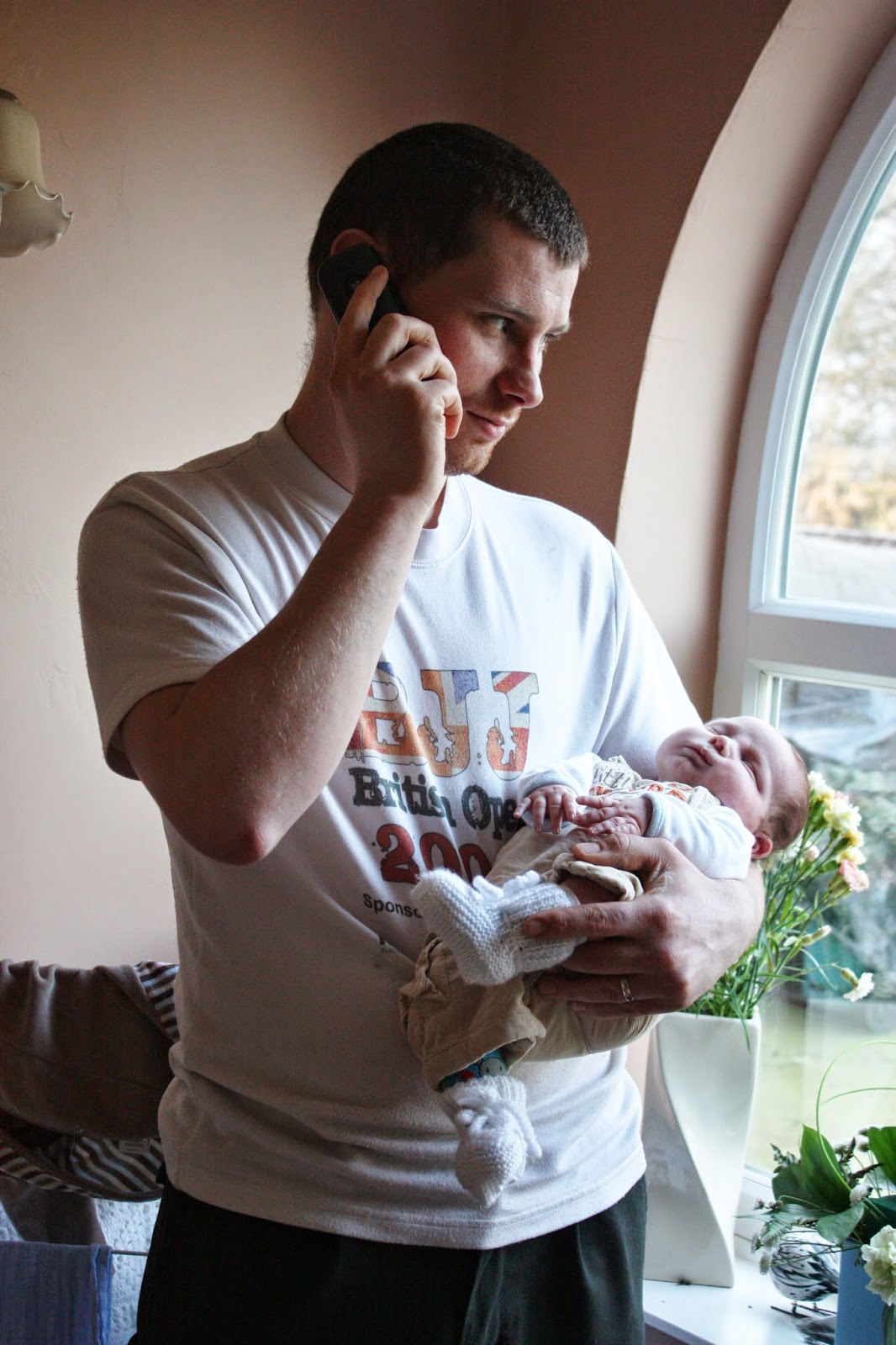
           Lee answering calls holding a newborn George

There are no days off, and no sick days for me or Lee. Even when I went into hospital to give birth, George was born at 3.59am, and Lee was back at the kennels for 6am! Lee has literally dragged himself out there, his face green with sickness, to care for the dogs (I am certain that the dogs knew he was really ill this particular time, they didn't play at all that morning, preferring to cuddle up on top of Lee as he lay groaning on the sofa!).

The kennels must always be manned by at least one person. This ultimately means that we very rarely go out together as a family. Hospital and dental appointments can be difficult to arrange 


It is often difficult to see family and friends when you work every day of the year. To be fair, we are both fairly antisocial anyway! We enjoy our own company and don't pine for social gatherings. Even so, it is easy to go long periods without seeing family and friends, and so recently we have spent some time and money decorating one of our rooms so that it is beautiful and new, to entice family members to come and stay with us as much as possible.


The kennels life is normality for George, and one day he'll be able to help us out and earn his pocket money!


And so there you have it. Kennel life, and I say life rather than job, because a job has an ending point at some time of the day, and the kennels does not. 
But although we miss out on many things, we never miss out on each other. Most families spend hours and hours apart each day, but not us, and I feel that's worth more than any holiday. It is also rewarding and heartwarming to care for dogs as a living, they are such amazing animals. Clever and sweet and oh so funny. It warms your heart to gain their confidence, help them settle and feel comfortable away from home, and watch them play together happily and enjoy themselves. It's wonderful to provide such a service to their caring owners, who put such enormous trust and faith in us, and it's amazing to be one of the first kennels to start changing what it actually means to be a kennel. Gone are the days when bars and concrete, endless barking and zero exercise is acceptable. Customers want more than that for their dogs these days. Perhaps, when more kennel owners start viewing this career as a life, rather than a job, we will see more and more kennels improve their standards. We have shown that a kennels can be different, it can be a home away from home, where a dog can be appreciated and loved by genuine 'dog people'. That's how it should be.